
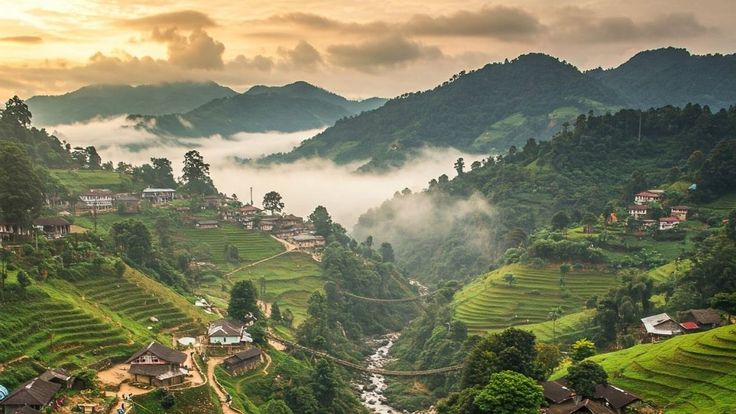
Some places don’t just look beautiful—they heal you silently. Meghalaya is one such destination. Tucked away in the northeastern part of India, this state feels like a soft whisper from nature, reminding us how life can be simple, pure, and deeply connected to the earth.
Known as “The Abode of Clouds,” Meghalaya is famous for its living root bridges, misty hills, crystal-clear rivers, and villages that redefine cleanliness and community living. Traveling through Meghalaya feels less like a trip and more like a lesson—about patience, sustainability, and respect for nature.
First Impressions of Meghalaya
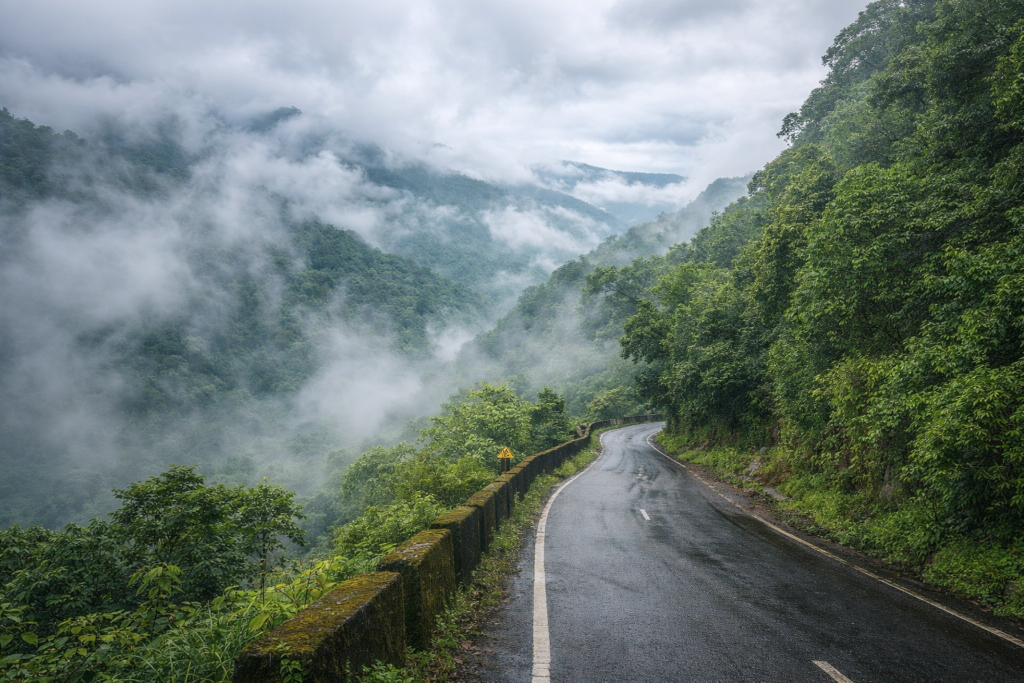
As soon as you enter Meghalaya, the air feels different—fresh, light, and full of life. The clouds float low, sometimes touching the roads, sometimes hiding entire hills. Everything looks lush and green, as if nature cleans itself every single day.
There is no chaos here. No unnecessary noise. Even the roads seem to move slowly, respecting the rhythm of the land. Meghalaya doesn’t rush you—it asks you to pause, breathe, and observe.
Living Root Bridges—Nature’s Engineering Marvel
What Are Living Root Bridges?
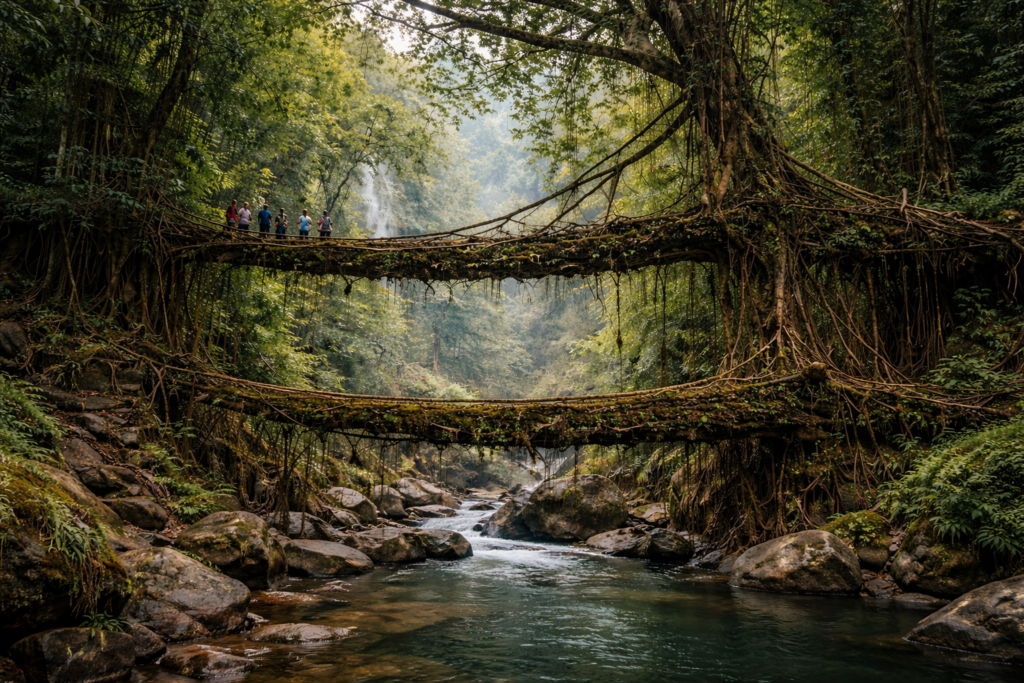
The Living Root Bridges are one of the most extraordinary examples of human–nature collaboration. Unlike regular bridges made of concrete or wood, these bridges are formed from the aerial roots of rubber fig trees.
Over generations, the Khasi and Jaintia tribes have carefully guided these roots across rivers and streams. Slowly, over 15–30 years, the roots grow thicker, stronger, and intertwine—creating a bridge that becomes stronger with time.
These bridges are not built—they are grown.
The Famous Double Decker Root Bridge
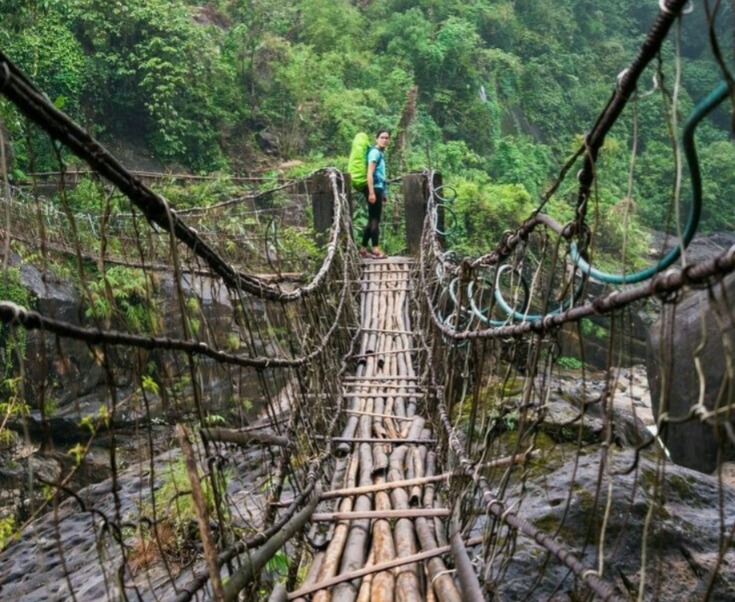
Located in Nongriat village, the Double Decker Living Root Bridge is the most iconic attraction in Meghalaya. Reaching it is not easy—you have to descend over 3,000 steps through dense forests and steep paths.
But every step is worth it.
The sound of birds, flowing water, and rustling leaves accompanies you throughout the trek. When you finally see the bridge, it feels unreal—as if nature itself decided to create architecture.
Standing on the bridge, you realize something powerful:
The strongest things in life grow slowly.
Sustainability Lessons from Root Bridges
The Living Root Bridges teach us lessons modern development often forgets:
- They don’t harm rivers or forests
- They last for hundreds of years
- They grow stronger with age
- They require patience, not machines
In a world obsessed with fast results, Meghalaya quietly proves that slow growth creates lasting beauty.
Clean Villages – A Way of Life, Not a Rule
Mawlynnong – Asia’s Cleanest Village
Mawlynnong is often called Asia’s cleanest village, but what makes it special is not awards—it’s mindset.
There are no trash bins overflowing, no plastic lying around, no bad smell. Every house has a bamboo dustbin, and waste is segregated naturally. Cleanliness here is not forced by fines or rules—it’s practiced with pride.
Children grow up learning that cleanliness is respect—for their home, village, and future.
Community Responsibility
In Meghalaya’s villages, cleanliness is a shared responsibility:
- Villagers clean paths together
- Plastic use is minimal
- Tourists are politely guided to respect nature
- Waste management is traditional and effective
There is no “someone else will clean it” attitude. Everyone contributes.
This sense of ownership creates villages that feel peaceful, organized, and welcoming.
Simple Homes, Rich Hearts
The villages of Meghalaya may look simple—wooden houses, tin roofs, stone paths—but the warmth of people makes them feel rich.
Locals greet you with gentle smiles. Conversations are slow, meaningful, and honest. Hospitality here is not commercial—it’s heartfelt.
Staying in a homestay feels like staying with family. You eat what they eat, live how they live, and understand life from their perspective.
Food of Meghalaya – Comfort from the Hills

Meghalaya’s food is simple, healthy, and closely connected to nature.
Popular dishes include:
- Jadoh – Rice cooked with meat and spices
- Tungrymbai – Fermented soybean dish
- Dohneiiong – Pork cooked with black sesame
- Rice & local greens
The flavors are mild yet comforting. The food doesn’t try to impress—it tries to nourish.
Waterfalls, Rivers, and Sacred Forests
Meghalaya is blessed with countless waterfalls and rivers. During monsoon, the entire state feels alive with flowing water.
Places like:
- Dawki River – crystal-clear water
- Nohkalikai Falls – India’s tallest plunge waterfall
- Sacred Forests of Mawphlang – protected by ancient beliefs
The sacred forests are especially powerful. Nothing is taken from them—not even leaves. Locals believe disturbing the forest brings imbalance. These beliefs have preserved biodiversity better than many laws.
Slow Travel in Meghalaya
Meghalaya teaches you slow travel.
Here, you don’t rush to tick destinations off a list. You sit by rivers, walk through villages, listen to rain, and watch clouds move.
The state doesn’t entertain you—it connects with you.
You learn to:
- Walk more, consume less
- Observe instead of photographing everything
- Respect local culture
- Leave places better than you found them
Best Time to Visit Meghalaya
October to April – Best for travel, trekking, and sightseeing
June to September – Monsoon season (very beautiful but challenging)
If you love rain, greenery, and dramatic landscapes, monsoon has its own magic.
Why Meghalaya Stays with You
Meghalaya doesn’t shout its beauty—it whispers. Long after you leave, the memories stay:
- The silence of forests
- The strength of root bridges
- The cleanliness of villages
- The kindness of strangers
It changes the way you look at development, success, and happiness.
Final Thoughts – A Lesson from the Clouds
Meghalaya is not just a destination—it’s a philosophy. It shows us that progress doesn’t always mean concrete and speed. Sometimes, progress means growing roots, staying clean, and living in harmony with nature.
If you’re searching for a place that reconnects you with simplicity, sustainability, and soul—Meghalaya is waiting.